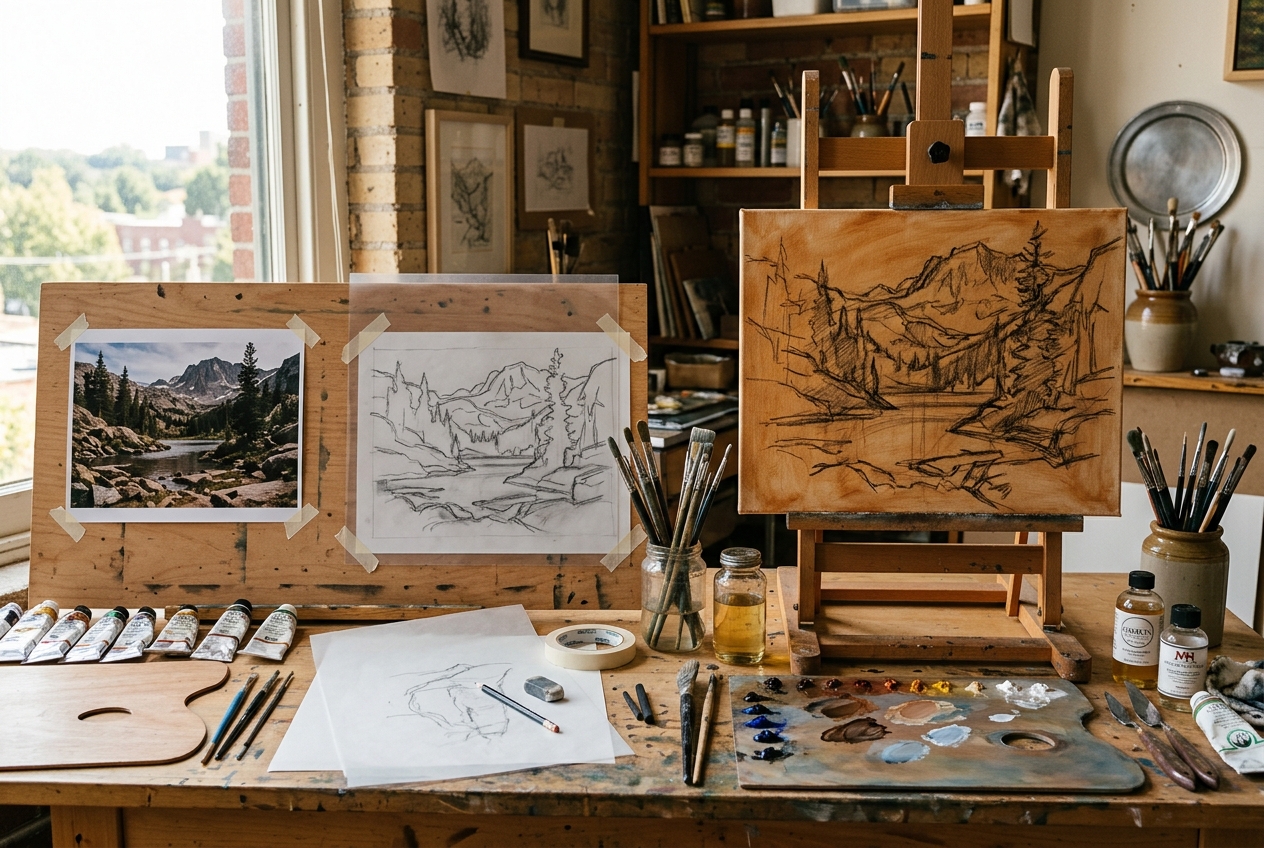
From Photo to Canvas: The Step-by-Step Atelier Prep Workflow for Modern Painters
Master the complete 4-stage atelier preparation pipeline: palette extraction, contour tracing, grid scaling, and imprimatura underpainting…
Standard digital color pickers are built around the additive RGB color model used by screens, where Red, Green, and Blue are the primary light sources. But when an artist sits down with real oil tubes, acrylic gouache, or pan watercolors, color works through subtractive pigment physics, following the classical Red, Yellow, and Blue (RYB) color wheel formulated by Goethe and Itten. On an RYB wheel, yellow sits directly opposite purple (not blue), and red complements green (not cyan). Understanding these classical pairings is the foundation for creating atmospheric vibration, mixing clean chromatic neutrals without mud, and establishing unified temperature chords. Pintado’s Artist Color Wheel is designed specifically for traditional and digital painters. Select any hue on the interactive 12-section wheel to explore complementary, split-complementary, triadic, analogous, and tetradic harmonies, view pigment mixing recipes, and generate instant tint-and-shade scales.
#E02128
Click directly on any of the 12 wedge segments (Primaries: Red, Yellow, Blue; Secondaries: Orange, Green, Violet; Tertiaries: Red-Orange, Yellow-Orange, Yellow-Green, Blue-Green, Blue-Violet, Red-Violet).
Toggle between Complementary (maximum dynamic contrast across the wheel), Split-Complementary (nuanced vibration with two adjacent hues), Triadic (vibrant triangle chords like Red-Yellow-Blue), or Analogous (calm neighbor hues sharing a common temperature).
Observe the traditional pigment recipe recommendation (e.g. French Ultramarine + Cadmium Yellow Medium for rich Olive Green). Explore the generated Tint (White) and Shade (Raw Umber) chips, and copy HEX or RGB codes to your clipboard with one click.
Master the complete 4-stage atelier preparation pipeline: palette extraction, contour tracing, grid scaling, and imprimatura underpainting…
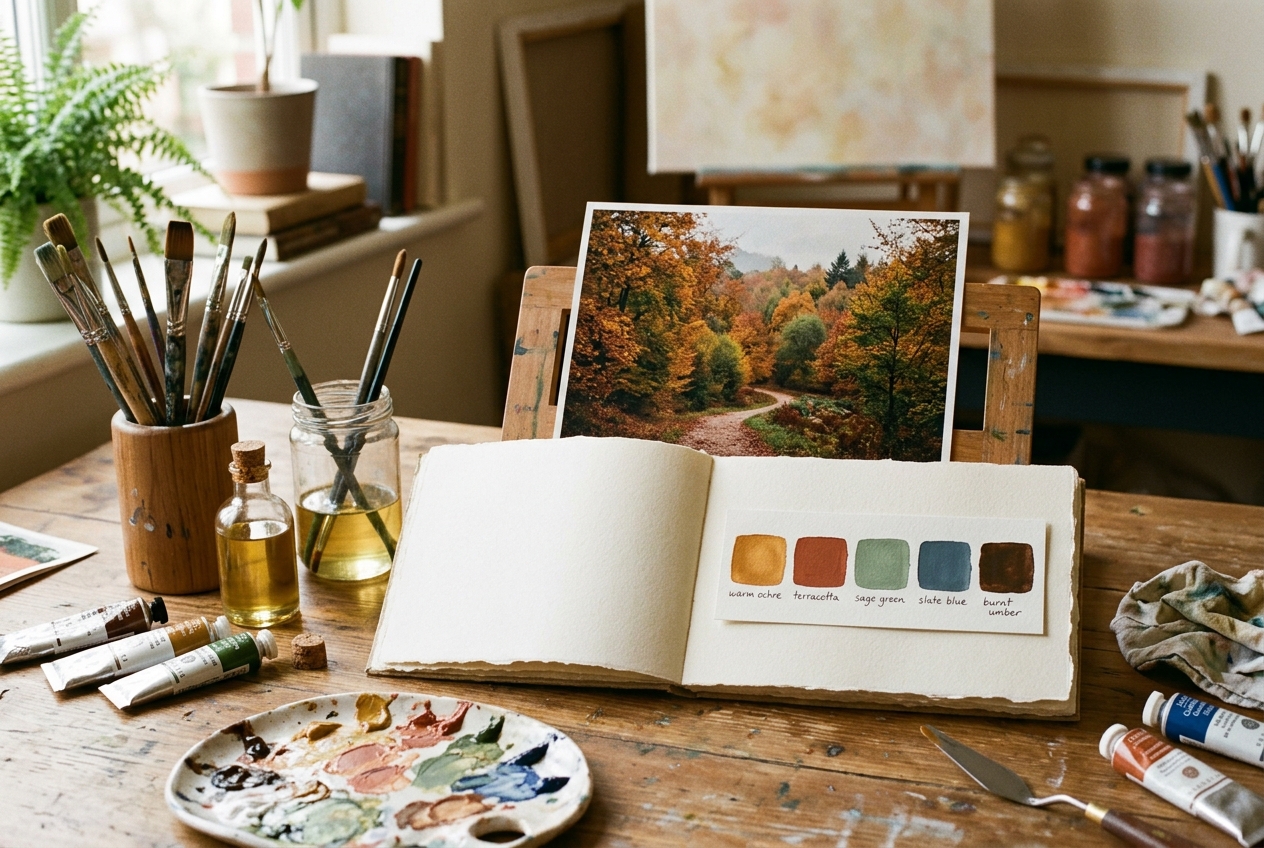
Overwhelmed by too many paint tubes? Learn how to extract a harmonious 5-color limited palette from…
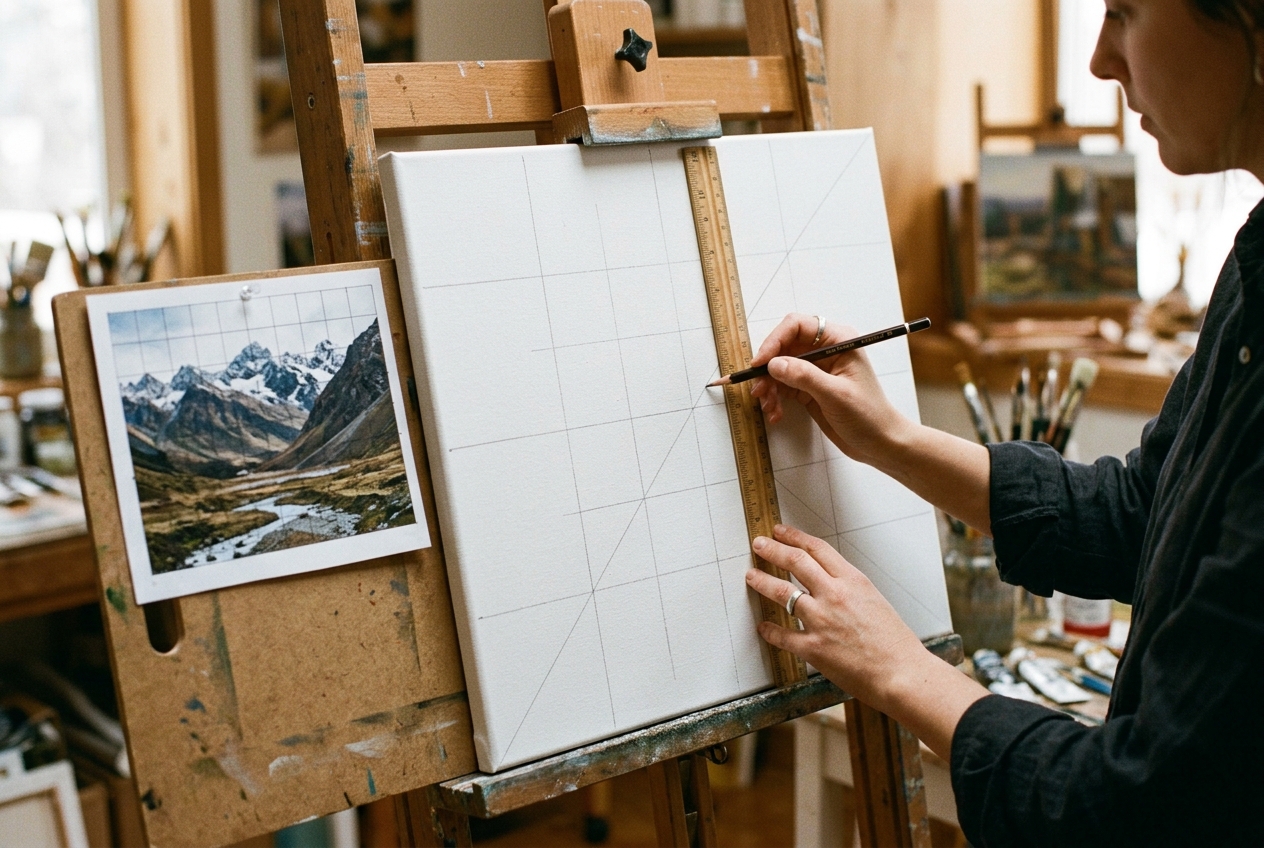
Master the grid method for drawing and canvas painting. Learn exact ratio formulas, grid density rules,…